Daixai Shan - GuangDong
Danxia Shan – Red Cliffs, Ancient Temples, and Three Days in the Heart of Guangdong
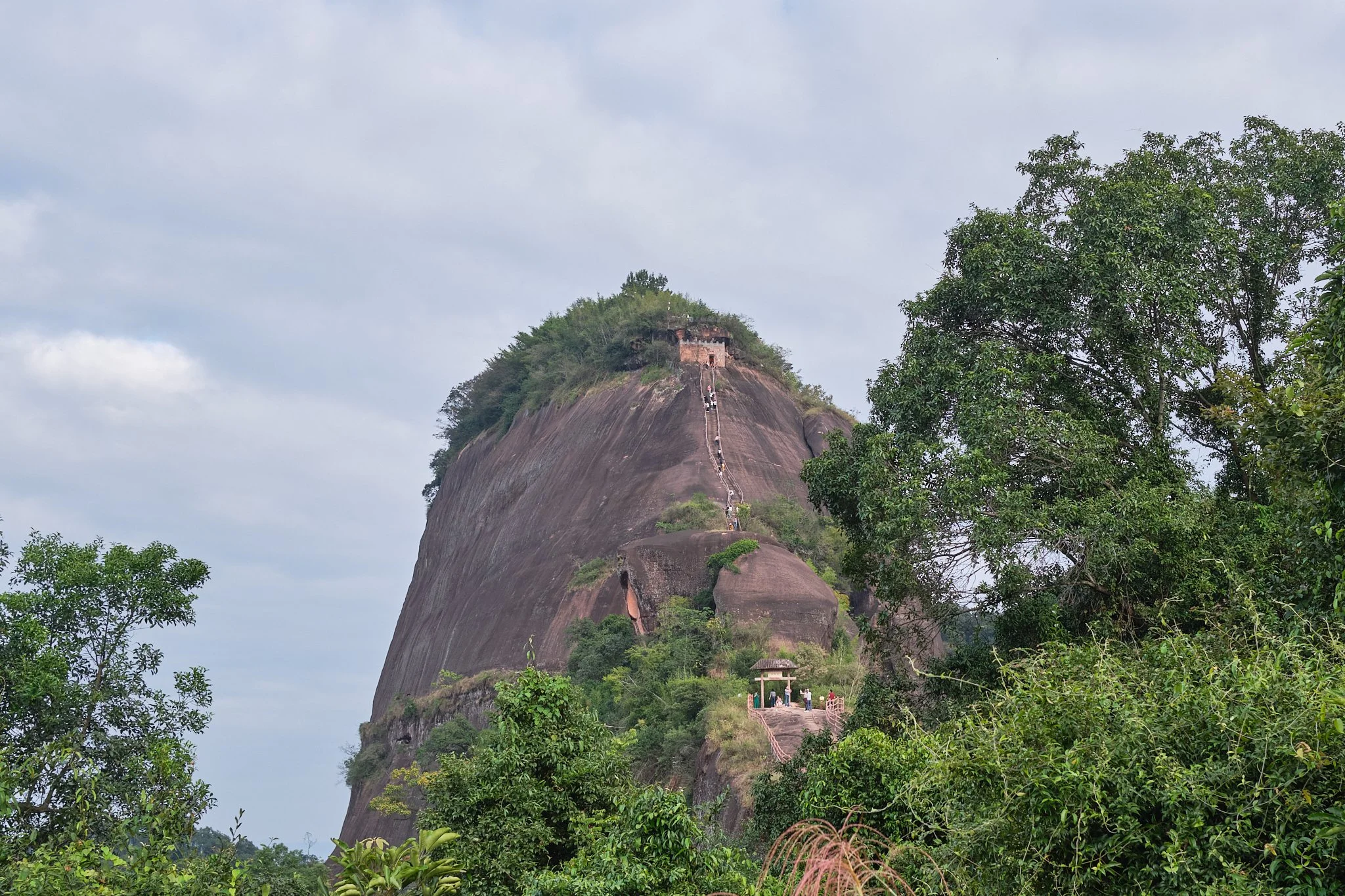
Danxia Shan—also known as Mount Danxia—is one of China’s most iconic geological parks, famous for its deep red sandstone cliffs, rounded peaks, and striking rock formations shaped by millions of years of wind and water. Located in northern Guangdong, the mountain range is part of a UNESCO World Heritage Site known collectively as the “Danxia Landform.” These rust-colored cliffs and natural pillars stretch for miles and have long been celebrated in Chinese art and poetry. For us, it became the perfect three-day escape from Changping: equal parts hiking, sightseeing, and soaking in the surreal landscape.
Day 1 – The Road to Danxia Shan
We left Changping around 8:30 a.m. with a private driver we hired for the four-hour trip north. The ride cost about 500 yuan in total—a surprisingly fair price for the distance—and gave us both flexibility and valuable time savings compared to navigating multiple trains and buses. The farther we drove, the more the scenery shifted from dense city blocks to misty mountains and quiet villages. By late morning, the red silhouettes of Danxia Shan began to appear in the distance.
Staying Inside the Park
Our accommodation was located inside the park, a huge advantage because Danxia Shan covers a massive area and walking between viewpoints can take hours. The park itself is a protected geological site dating back more than 70 million years, shaped by erosion into steep red cliffs, natural bridges, and formations with names inspired by myth and imagination. Historically, the region has also been home to Taoist and Buddhist hermits who settled in the caves and cliffsides, leaving behind temples that still sit perched above the valleys today.
Once we settled into our room, we headed into town for lunch. The locals are famous for their chicken, and that’s exactly what we ordered—simple, fragrant, and incredibly fresh.
Yang Yuan Stone & Jia Dun Ting
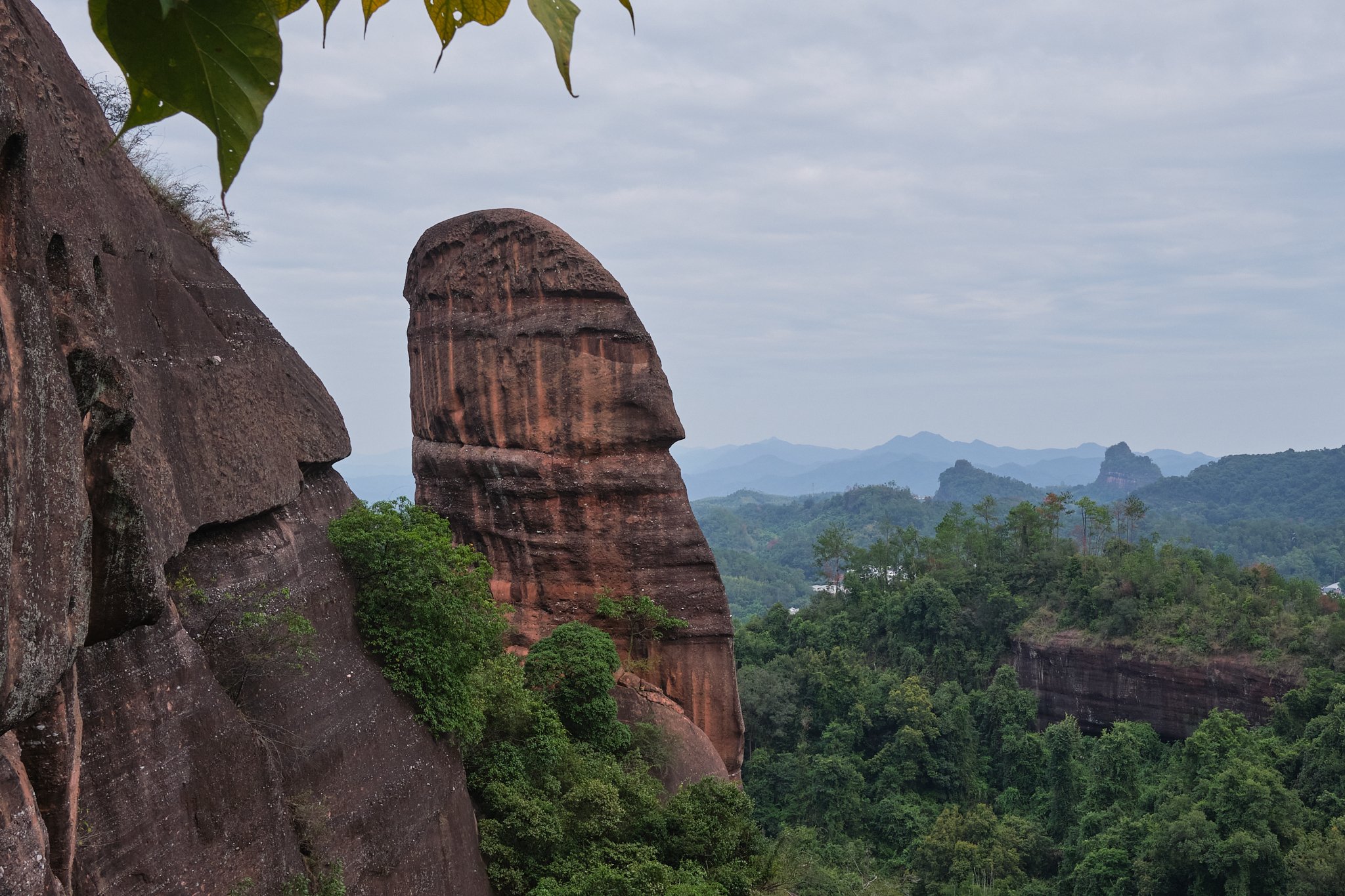
With lunch done, we were ready to explore. Our first stop was Yang Yuan, one of the park’s most famous formations, known for its tall, smooth, column-like shape rising dramatically from the landscape. It's a short walk from most hotels on this side of the park, and seeing it up close gives a real sense of the scale and gravity of Danxia’s rocks.
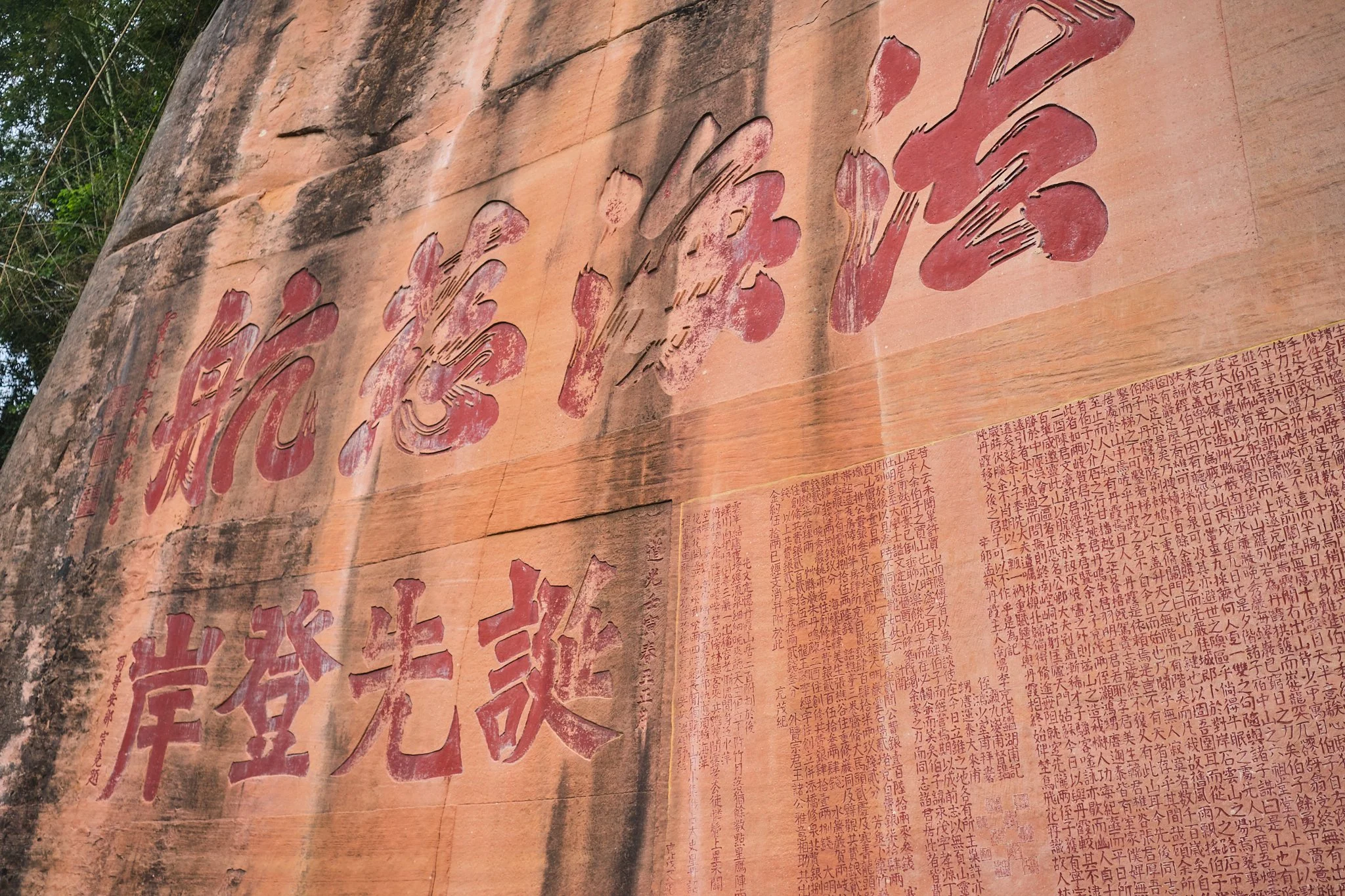
Nearby is Jia Dun Ting, a small viewing platform offering panoramic looks across the red cliffs and lush green valleys. The walk is gentle, with well-maintained paths and wooden steps weaving through forested slopes. We took our time, stopping often for photos.
Shiziyan & Ton Tai Qiao
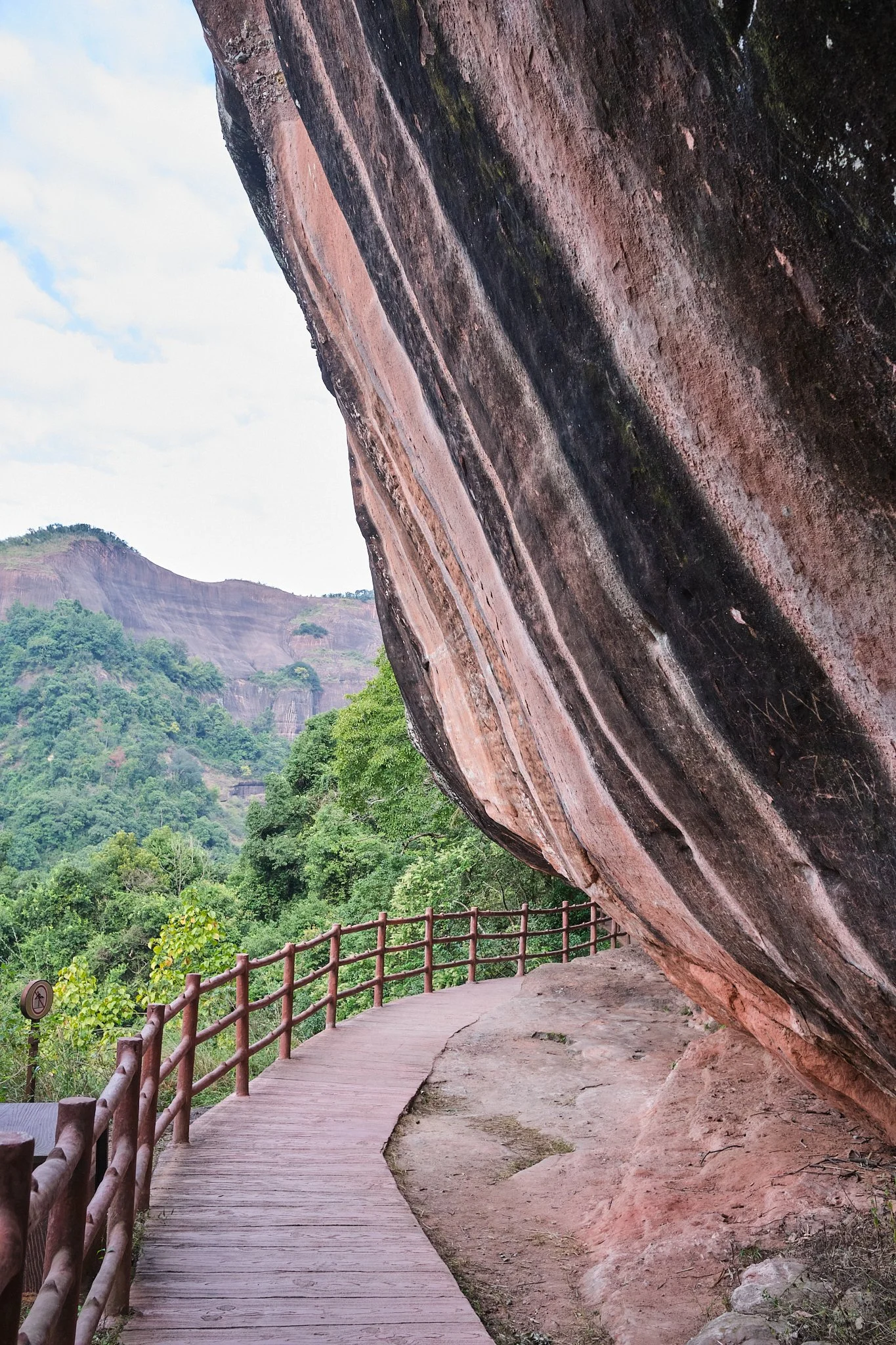
Next, we continued toward Shiziyan, another scenic zone known for its layered cliffs and narrow pathways. We specifically sought out Ton Tai Qiao, a natural stone arch formed over thousands of years. Standing on the bridge, you can feel the wind cutting through the valley below while the cliffs glow warm red in the afternoon sun.
Altogether, our walk took around six hours—a slow, unhurried exploration with frequent photo breaks. By sunset we were ready for dinner, and that’s when we had one of the most memorable moments of the trip. We ordered fish, and the server nodded, hopped on his moped, and drove off. He returned ten minutes later holding a plastic bag with a live fish inside to confirm our order. Natasa looked stunned. It was peak rural China in the most charming way.
After a full day of travel, hiking, and a touch of jet lag, we called it an early night.
Day 2 – Deep into Danxia Shan
This was our full day inside the park, so we set off early to explore the opposite side of the range. From the hotel, we walked along the boardwalk that hugs the cliffs, though you can also take a bus or ferry to conserve energy for the climbs ahead.
Jinshi Yan
Our first major stop was Jinshi Yan, a towering rock face whose name means “Golden Lion Cliff.” Up close, the sandstone glows warm orange, especially when sunlight cuts through the morning haze. The climb isn’t too difficult, and from the top you get an impressive view of the river snaking through the valley below.
Beichuan Temple (Beichuan Si)
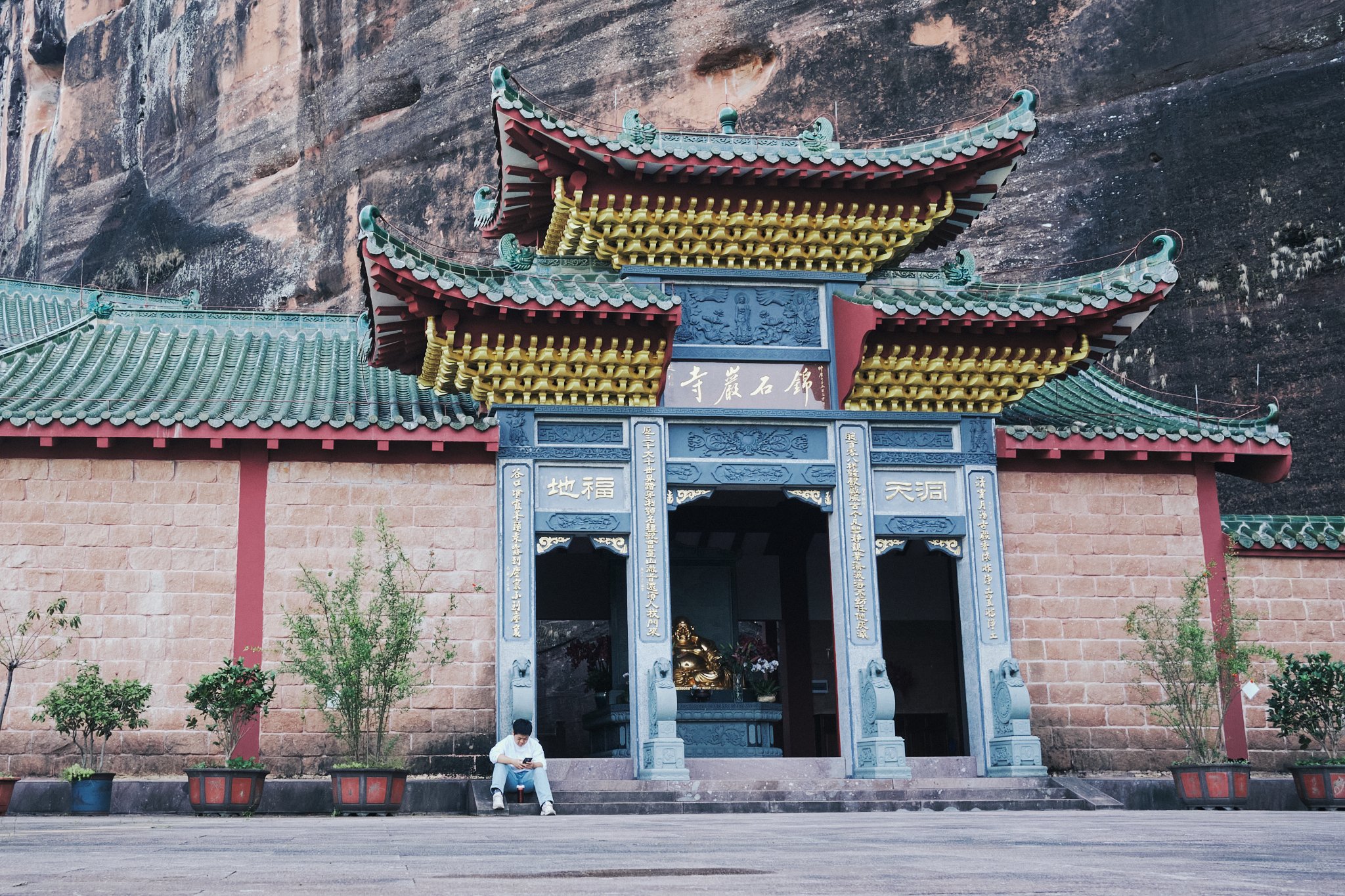
Further along the trail sits Beichuan Si, a peaceful Buddhist temple tucked between two massive cliffs. Red lanterns line the entryway, and the air is heavy with incense. Monks and visitors move quietly through the halls, and the surrounding mountains make it feel almost hidden from the world.
Guan Ri Ting – The Sunset Pavilion
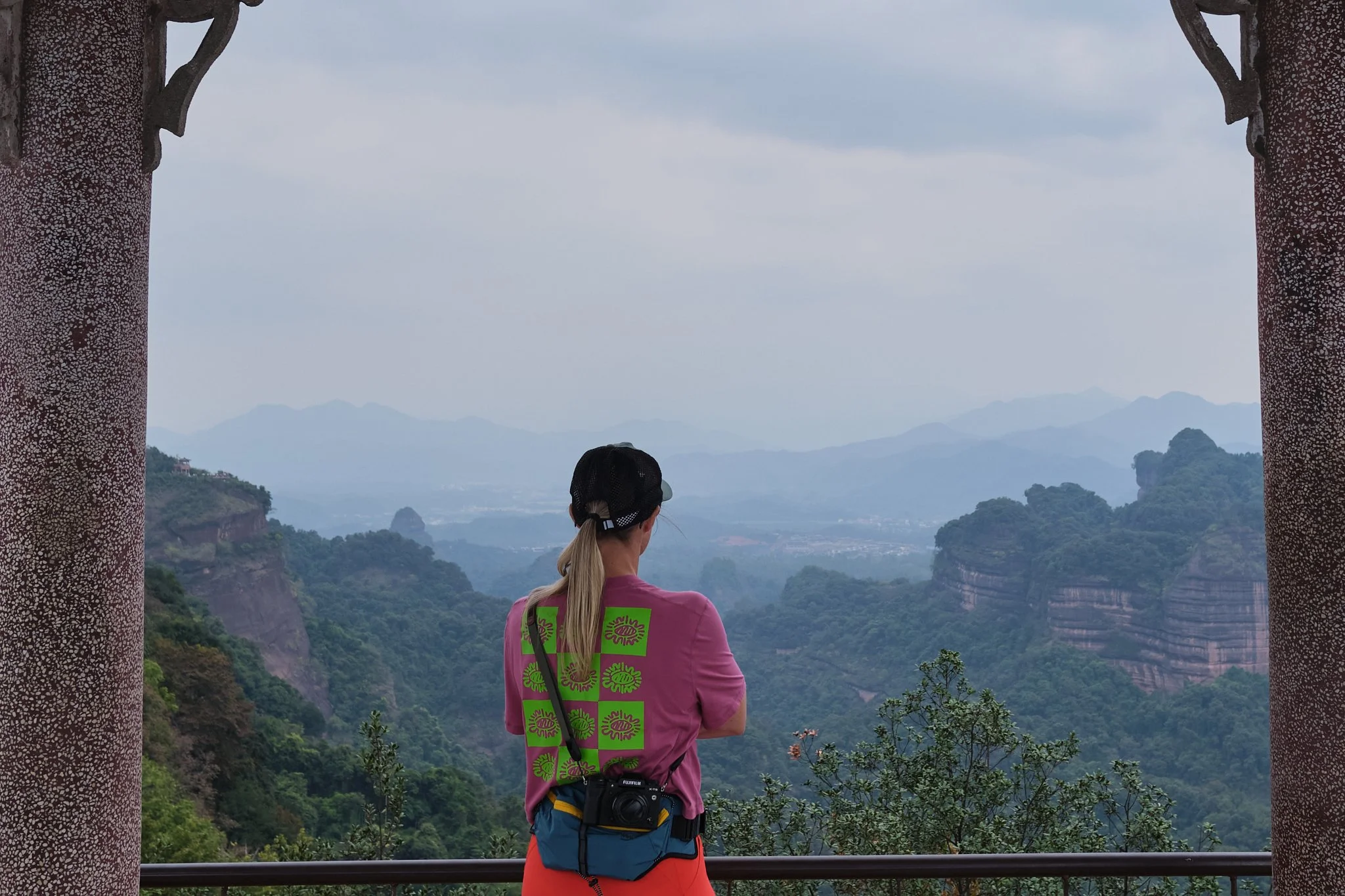
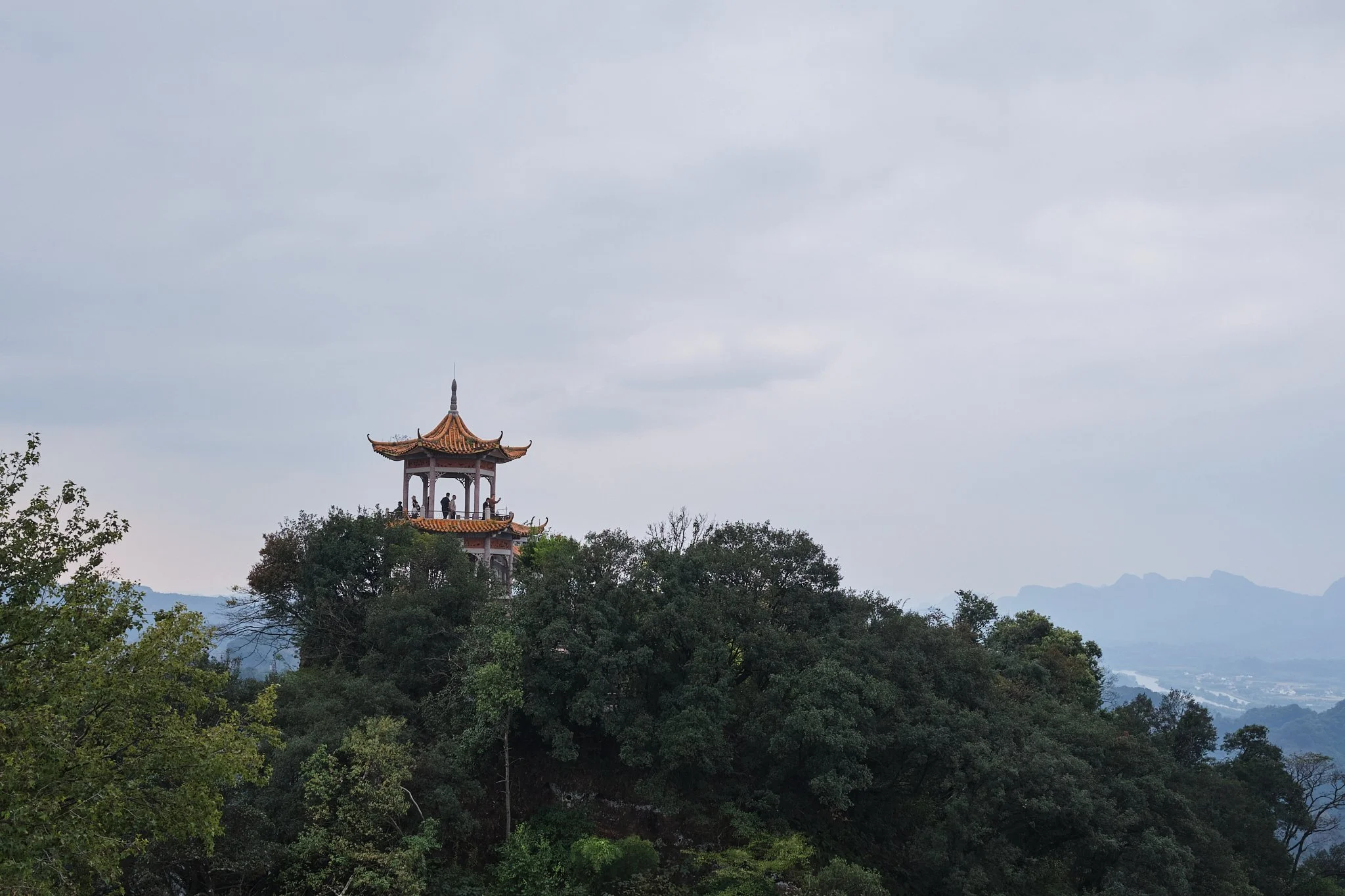
Next was Guan Ri Ting, a small pavilion perched high on a ridge. The name translates to “Sun Viewing Pavilion,” and although we weren’t there at sunset, the view was still incredible—endless waves of red mountains rolling out into the horizon.
Yin Yuan Stone
One of the most unique formations of the day was Yin Yuan Stone, shaped after centuries of erosion into a narrow pillar balancing against a wider base. Locals say it resembles a seal or stamp used in ancient Chinese calligraphy. Up close, the patterns in the sandstone are intricate and beautifully layered.
Xianglong Lake
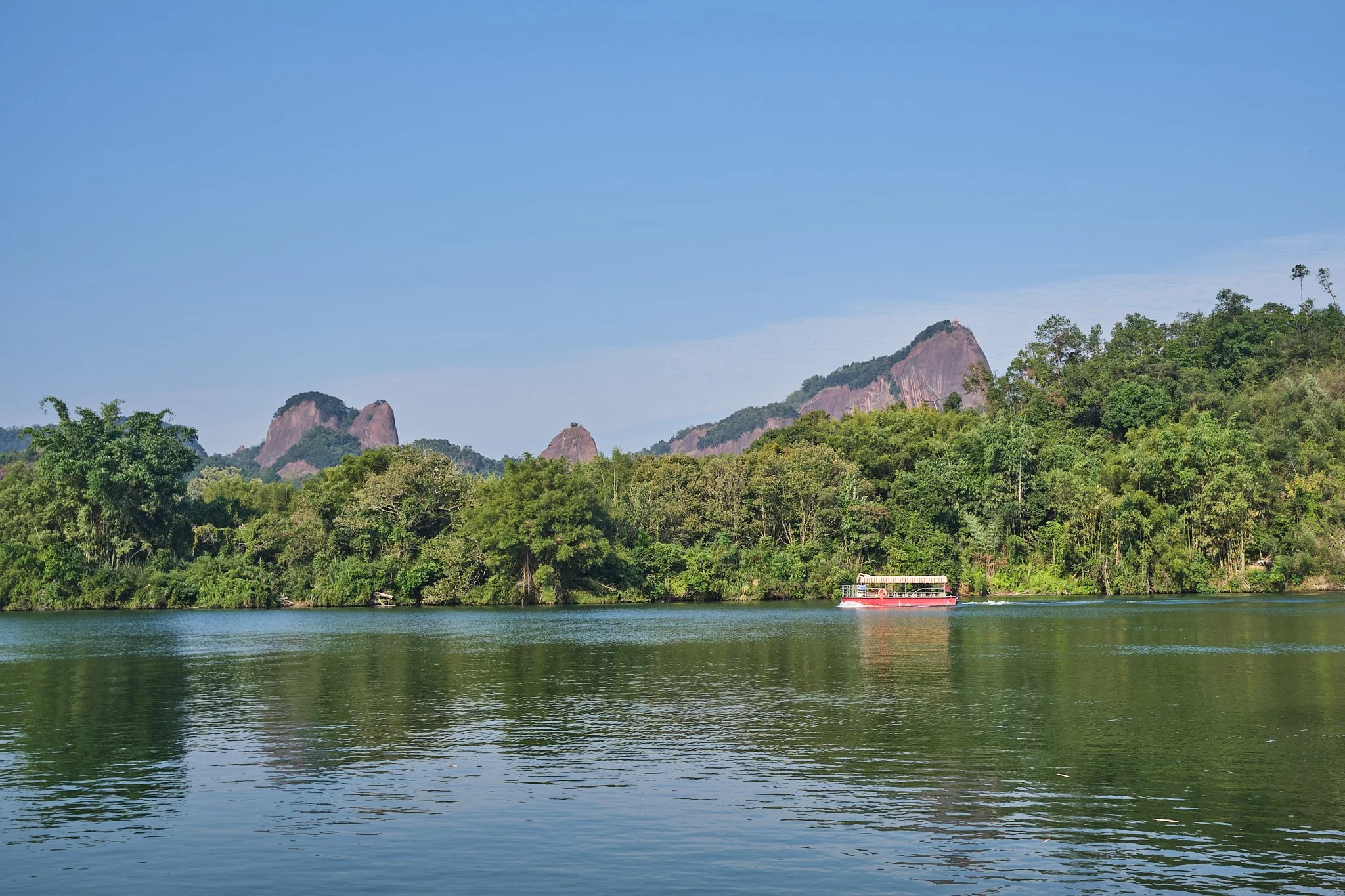
Descending into the valley, we reached Xianglong Lake, the most serene part of the route. Calm, green water reflects the cliffs, and small boats drift across the surface. It’s a perfect contrast to the steep climbs earlier in the day—cool, quiet, and peaceful.
Xianju Yan Taoist Temple
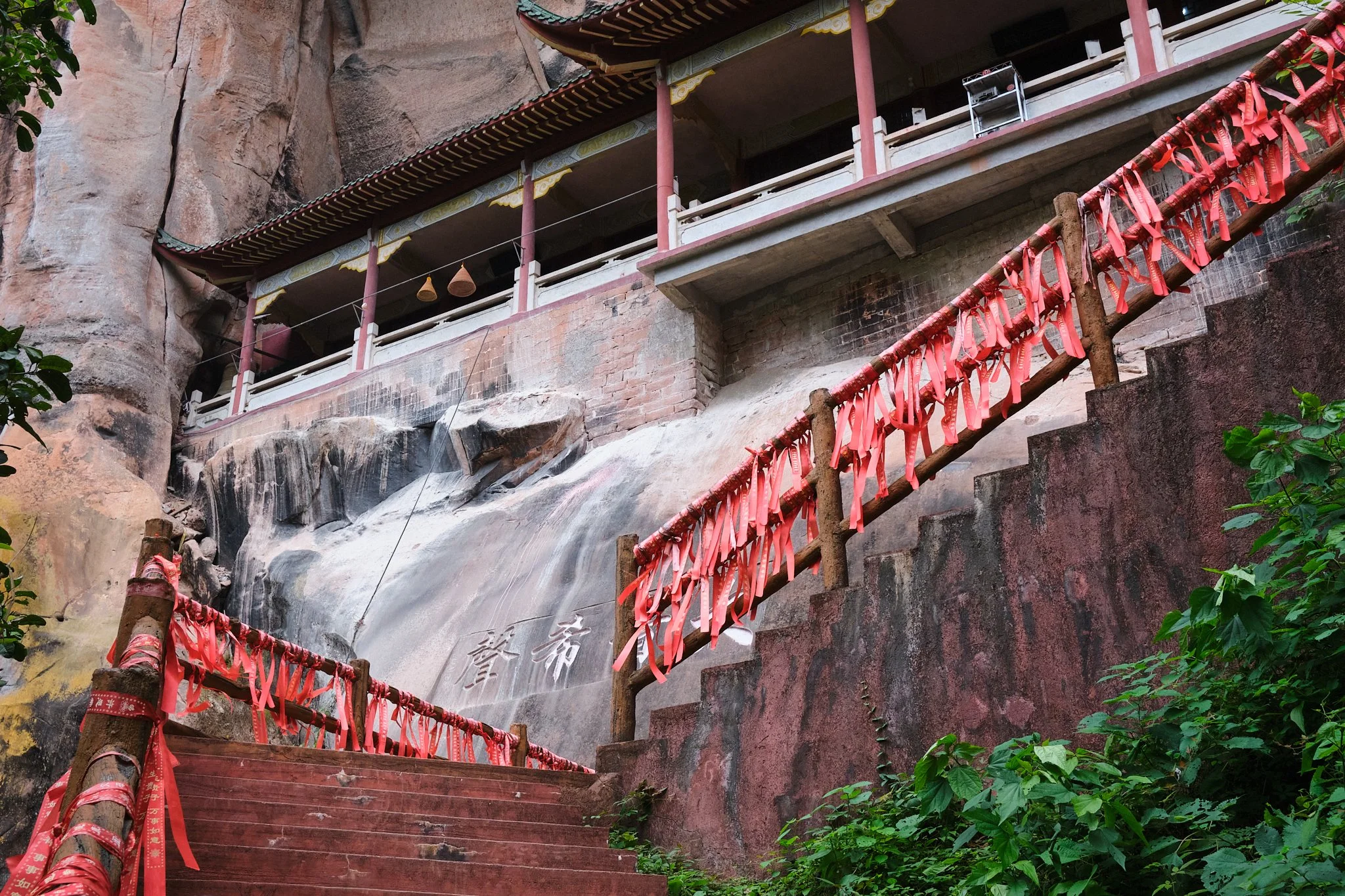
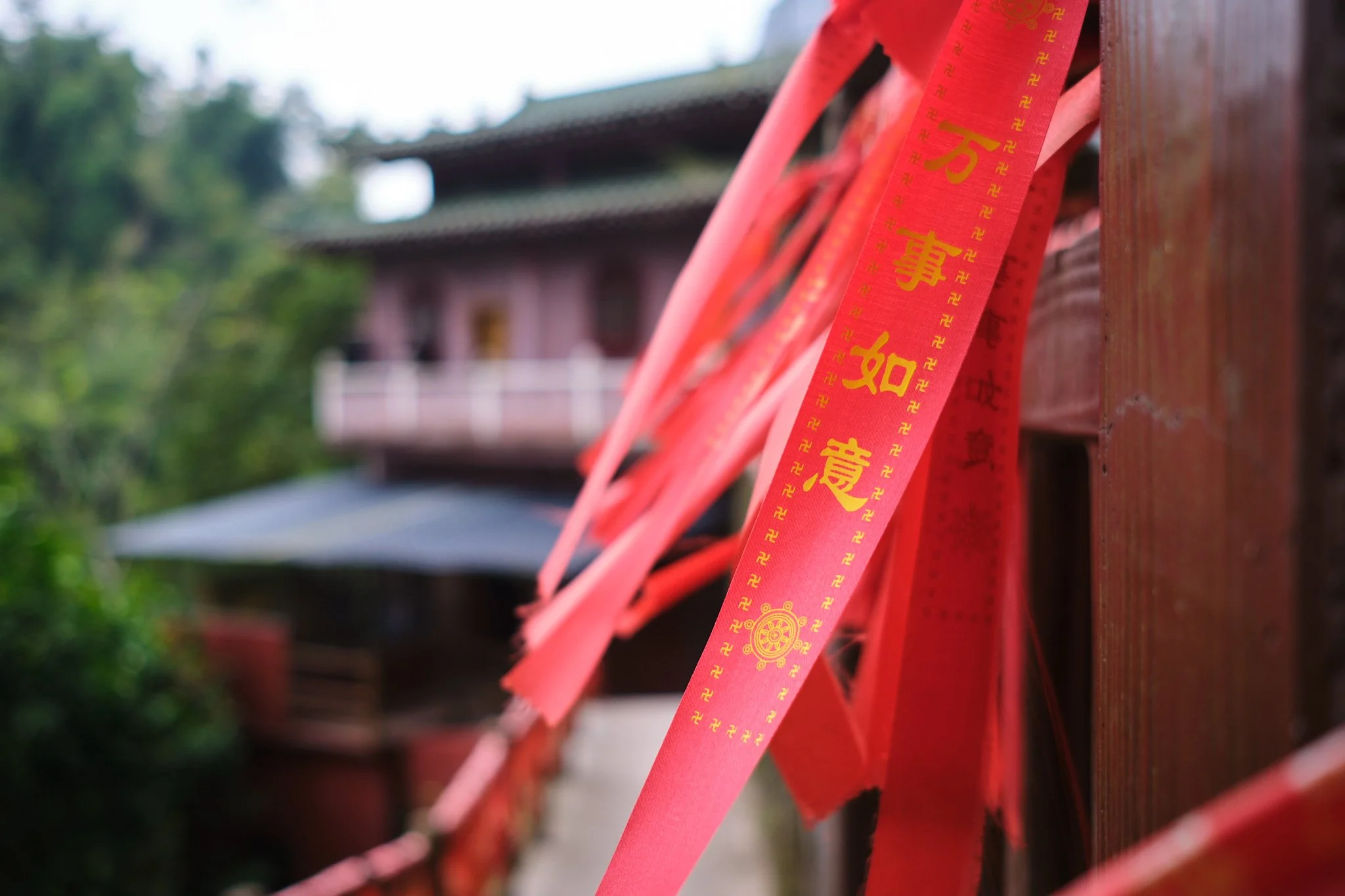
One of the most spiritual stops was Xianju Yan, a Taoist temple built directly into the cliff face. The stairs carved into the stone lead you through narrow passageways and courtyards sheltered by overhanging rock. This area has been a retreat for Taoist practitioners for centuries, and you can feel the stillness and age in every corner.
Back to the Hotel
By late afternoon, we caught one of the park buses back toward the main entrance and walked the last stretch to our hotel. After dinner the night before, we decided to switch things up and found a Hunan restaurant—not the local style, but incredibly good. The spice, flavor, and freshness outshone anything else we had eaten in the park. Easily the best meal of our time in Danxia Shan.
Day 3 – Off to Hong Kong
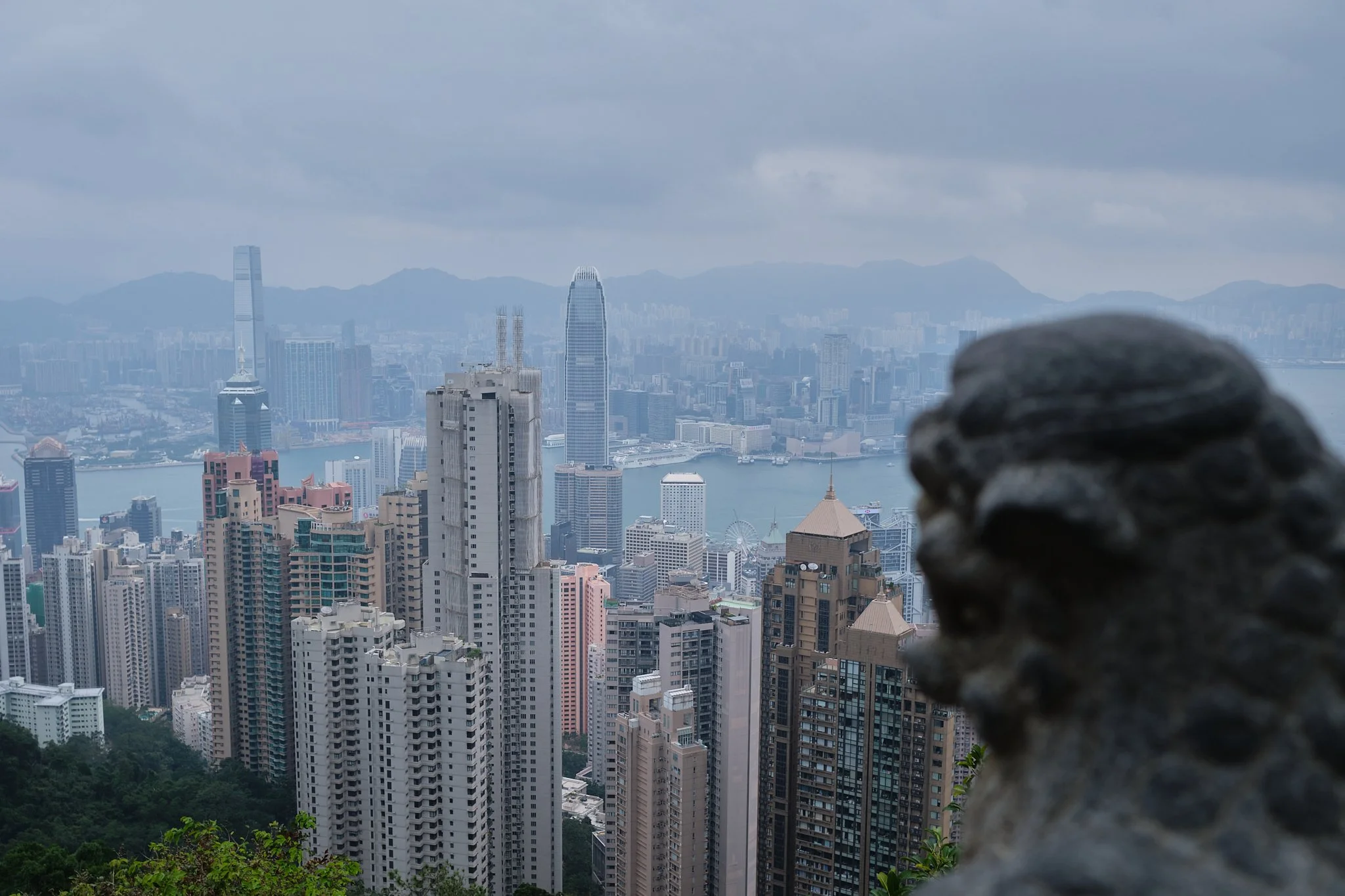
The next morning we woke early for our train to Hong Kong. The high-speed station is about an hour from the park, so our driver picked us up before sunrise. As we left, Danxia Shan faded behind us—red cliffs disappearing into morning fog, ancient temples tucked away in the folds of the mountains. It was the perfect ending to a short but unforgettable adventure.